CMA Review
28 November 2025
Providing a strong voice for veterinary nursing during CMA formal hearing
Throughout its ongoing investigation, BVNA has engaged with the Competition and Markets Authority (CMA) to highlight the significant role of veterinary nurses – in providing excellent patient and client care, upholding animal welfare, and improving the accessibility of veterinary care.
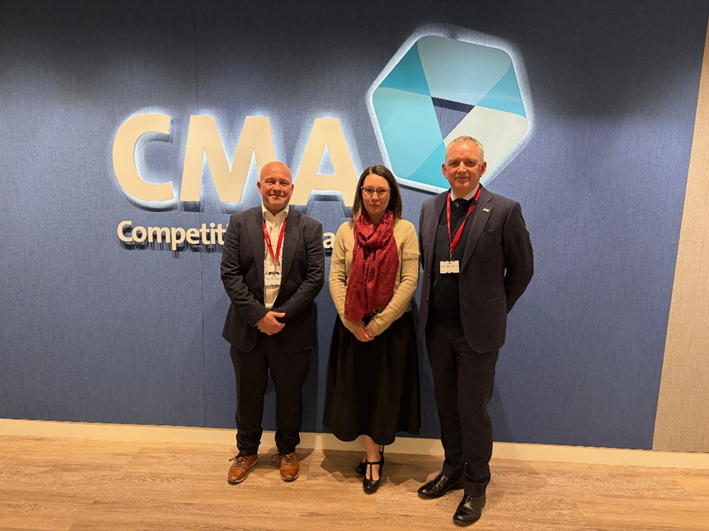
Representing the veterinary nursing profession, on Wednesday 26th November we attended a formal hearing held by the CMA, following the recent publication of their Provisional Decision Report (PDR).
The formal hearing also follows our response to the PDR, submitted jointly alongside the British Veterinary Association (BVA), British Small Animal Veterinary Association (BSAVA), Society of Practising Veterinary Surgeons (SPVS) and Veterinary Management Group (VMG).
During the hearing, alongside BVA and BSAVA, we were able to add further detail to our written response and invite questions from the CMA Inquiry Group. We were able to convey the measures within the PDR which we support, and those which we feel need further refinement in order to avoid negative unintended consequences – whether to veterinary businesses, the veterinary professions, animal welfare, or indeed clients themselves.
The hearing provided an important opportunity for our respective associations to continue to shape the CMA’s approach as it reaches the conclusion of its investigation, which we anticipate will be by Spring 2025. During our jointly delivered presentation, BVNA Senior Vice President Lyndsay Hughes presented two sections – on client complaints and redress, and regulatory reform of the Veterinary Surgeons Act.
Areas we welcome
We communicated our strong support for the recommendation to UK Government for reform of the Veterinary Surgeons Act. The CMA have identified the need to introduce practice regulation, modernised regulation of individual professions, plus significant redesign of the internal structure and governance of the regulator to enable it to monitor and enforce legislation more effectively.
We also strongly supported the CMA’s provisional points for consideration by UK government and Royal College of Veterinary Surgeons (RCVS) made specifically in relation to veterinary nurses; statutory protection of the ‘veterinary nurse’ title, better clarity surrounding Schedule 3 and delegation, and potential expansion of the scope of tasks which may be performed by veterinary nurses. However, we also took the opportunity to highlight the lack of significant further mention of veterinary nurses within the CMA’s proposals. We consider that the significant value that the RVN provides to the veterinary team, the patient and the client, could have been expanded upon much further in order to support the delivery of the CMA’s aims.
As we have done so throughout the investigation, we also fully welcome the need to provide greater levels of transparency to clients and prospective clients. We therefore communicated our support for measures to provide accessible information on practice ownership, basic service information, and pet care plans – as well as the provision of written estimates and itemised bills. We also support the need for standardised complaints procedures for clients.
Where we raised concerns
As highlighted in our written response, we also took the opportunity to communicate to the CMA Inquiry Group our outstanding concerns, particularly surrounding some of the medicine market opening remedies. There are some suggested proposals which we feel these are disproportionate to the identified problems, or are unworkable in practice and could result in significant unintended consequences.
Amongst these concerns include the requirement for veterinary practices to promote competitors including online pharmacies, or attest to any actual or potential savings elsewhere. This requirement is very rarely, if ever, seen amongst other service providers or retailers, and therefore we consider it unrealistic to make this expectation of veterinary businesses.
We also communicated our concerns surrounding the suggest cap on prescription fees of £16 including VAT, which sits far below the median of £18.75 + VAT found within the SPVS 2024 fees survey. In addition, we reiterated the difficulty in implementing a requirement to provide written prescriptions ‘by the end of the day’, due to the significant additional admin burden placed solely onto vets, and especially those within smaller practice settings. We’re concerned this will lead to decreased vet time available to consult – and therefore, lead to reduced access to veterinary care, increased costs to clients, and ultimately a negative impact on animal health and welfare.
Finally, we encouraged the CMA to consider how work by the RCVS may be funded, where it relates to veterinary businesses rather than individual vets and veterinary nurses. We also underlined the need for both the veterinary professions and businesses to have sufficient time to adapt to any remedies implemented.
The CMA Inquiry Group have demonstrated their willingness to listen to our members’ views throughout the investigation process to date, and we have warmly welcomed the opportunities to put these views forwards – whether in written consultation responses, or verbally, such as during these formal hearings. As the investigation soon reaches its conclusion, our aim is to ensure the CMA has all the information it needs to reach an eventual package of remedies which will benefit veterinary clients and animal welfare, along with representing workable and proportionate solutions to veterinary professionals and businesses.
More information surrounding our engagement with the CMA investigation to date can be found here; https://bvna.org.uk/project/competition-and-markets-authority/