
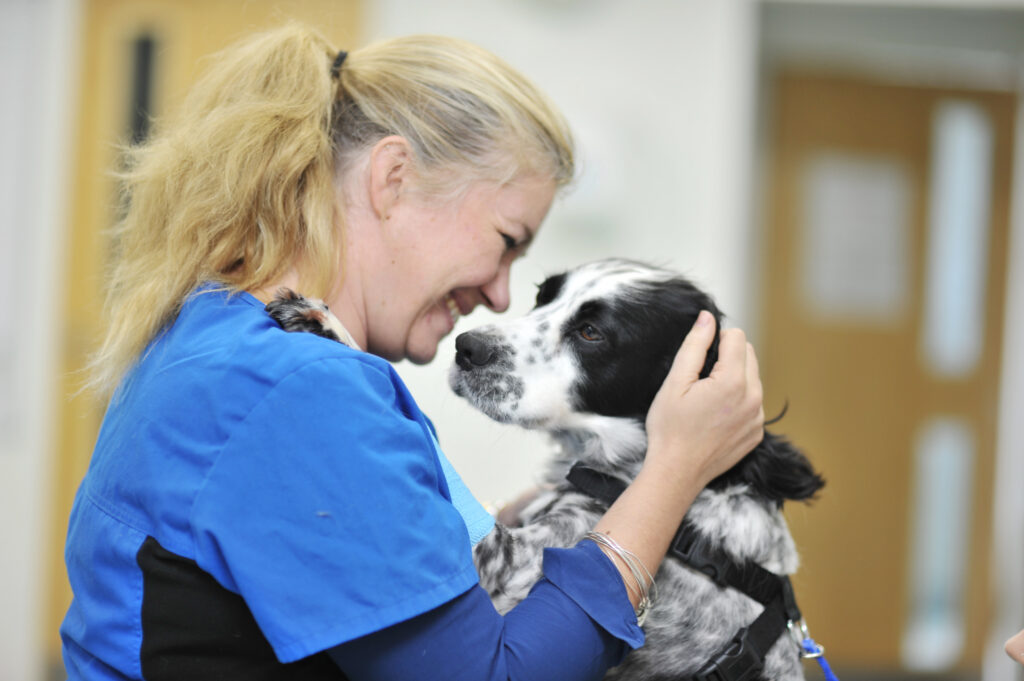
In this blog for Veterinary Nursing Awareness Month, BVNA Council Member Kate Davies discusses how compassion and empathy are at the heart of veterinary nursing, shaping how nurses care for both animals and their owners.
Find out more about VNAM here, and how you can get involved this year.
As veterinary nurses we provide compassion in everything that we do, and in ways that may not be obvious.
Compassion and empathy are at the heart of veterinary nursing, shaping how nurses care for both animals and their owners. Veterinary nurses understand that animals often arrive frightened, in pain, or stressed, and they respond with gentle handling, patience, and reassurance to reduce fear and discomfort. By recognising signs of fear, pain, or anxiety in animals, veterinary nurses can adjust their approach to ensure the animal’s welfare is always prioritised. Seemingly small gestures like allowing owners to leave behind a blanket or toy for the animal during their stay can all be signs of compassion.
Compassion and empathy are extremely important when interacting with pet owners. Many owners see their pets as members of their family, so bringing them to the veterinary clinic can be a stressful and emotional experience. Veterinary nurses show compassion by listening carefully to owners’ concerns, answering questions in a clear and supportive way, and reassuring them about the care their animal is receiving. In difficult situations, such as when a pet is seriously ill or needs to be euthanised, veterinary nurses provide emotional support and understanding, helping owners through what can be a very painful decision.
Whether comforting a nervous patient, assisting in treatment, or supporting a family during end-of-life care, empathy allows veterinary nurses to provide care that respects the emotional needs of everyone involved.
Sometimes compassion can extend further than the practice being natural animal lovers and carers – if we see an animal suffering outside we cannot ignore it (I’ve saved about 4 birds so far). We often are helping people and animals outside the practice too.
As veterinary nurses we have a naturally caring nature and when we see our colleagues struggling or upset we want to help, or show that we are there for them. This could be something as simple a small chat or offering a cup of tea. Let’s not forget the importance of this compassion to each other and to ourselves.
Kate Davies, BVNA Council Member
