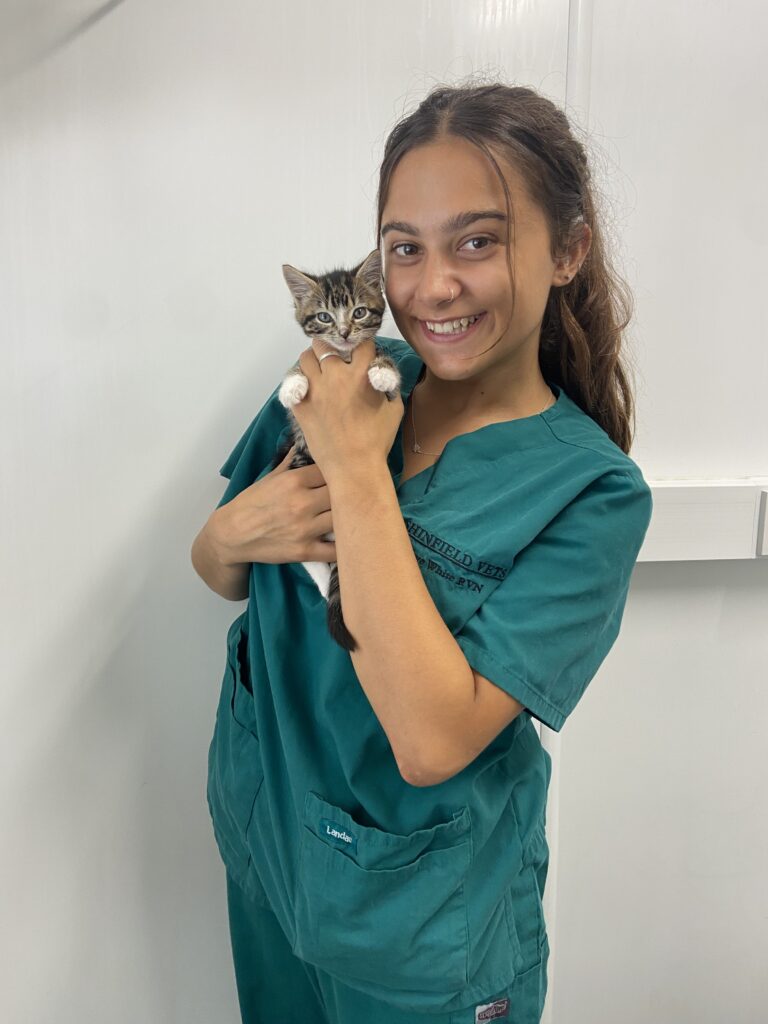
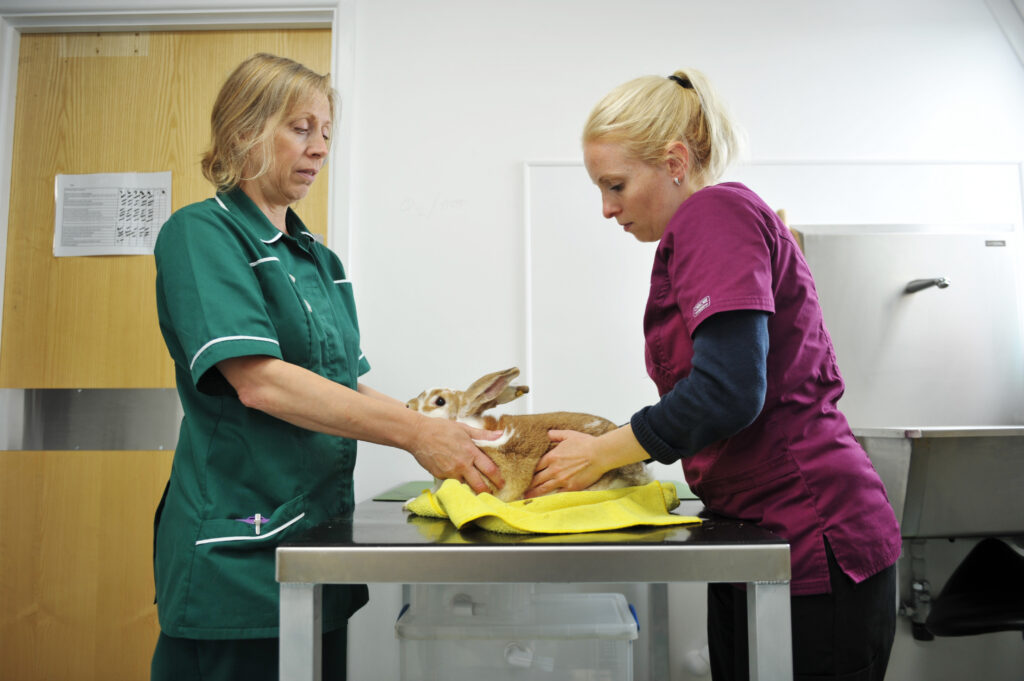
In this blog for Veterinary Nursing Awareness Month, Skye White discusses how compassion is an essential quality, and how a calm presence can make the difference between panic and reassurance.
Find out more about VNAM here, and how you can get involved this year.
Being a veterinary nurse is a career built on compassion. Every day, we care for animals who cannot explain their pain, fear, or discomfort in words. That means you learn to read the subtle signs — a tucked tail, flattened ears, a change in breathing — and respond with patience and gentleness. Compassion isn’t just a nice quality in this role; it’s essential. Whether you’re holding a nervous dog before surgery or comforting a cat during recovery, your calm presence can make the difference between panic and reassurance. We try and picture ourselves in our patients ‘paws’ and provide comfort and love to those with us.
Empathy is just as important when working with owners. Pets are family members, and when they’re unwell, their owners are often anxious, frightened, or even grieving. A veterinary nurse stands in that emotional space every day — explaining procedures clearly, listening to concerns without judgment, and offering quiet reassurance during difficult moments. Veterinary nurses frequently act as a bridge between the veterinarian and the client, translating medical information into reassuring, understandable language. In times of loss, we may be the one who provides tissues, a steady voice, or simply silent support while a family says goodbye. We need to be a reassuring person to these owners and listen to their worries and concerns. Even when we’ve become attached to the patient and are feeling our own emotions, we need to connect with the owner and help them through these tough situations. We’re the face they’re going to remember and the owner is just as important as the patient. The owners have created lasting memories with their pet and their pet have been through all their happy, sad and trying times which is why it’s important to handle each patient with professionalism and respect.
The job also demands resilience. Compassion fatigue is real, and balancing emotional openness with professional strength can be challenging. Yet it’s that same empathy that makes the role so meaningful. You celebrate recoveries, first vaccinations, and wagging tails walking out the door. You advocate for animals who can’t advocate for themselves.
To be a veterinary nurse is to blend medical skill with heart. It’s a profession where technical knowledge and emotional intelligence go hand in hand — where kindness is part of the treatment plan, and empathy is as important as any medication you administer, any anaesthetic you monitor and any prescriptions you dispense. These emotions are not a weakness, they are a strength – along with being able to process hundreds of different emotions each day.
Compassion and empathy helps us to tailor the care individually to both patient and owner ensuring the best possible outcome for everyone. Not only do these emotions help clients, it’s helping the team. When others are struggling, have had a hard case, these emotions help to connect each other and guide them through the process. Veterinary nurses’ emotions are not separate from their professional role—they are central to it, shaping the compassion, resilience, and dedication that define excellent veterinary nursing.
Skye White RVN FdSc GradCert(A&A)