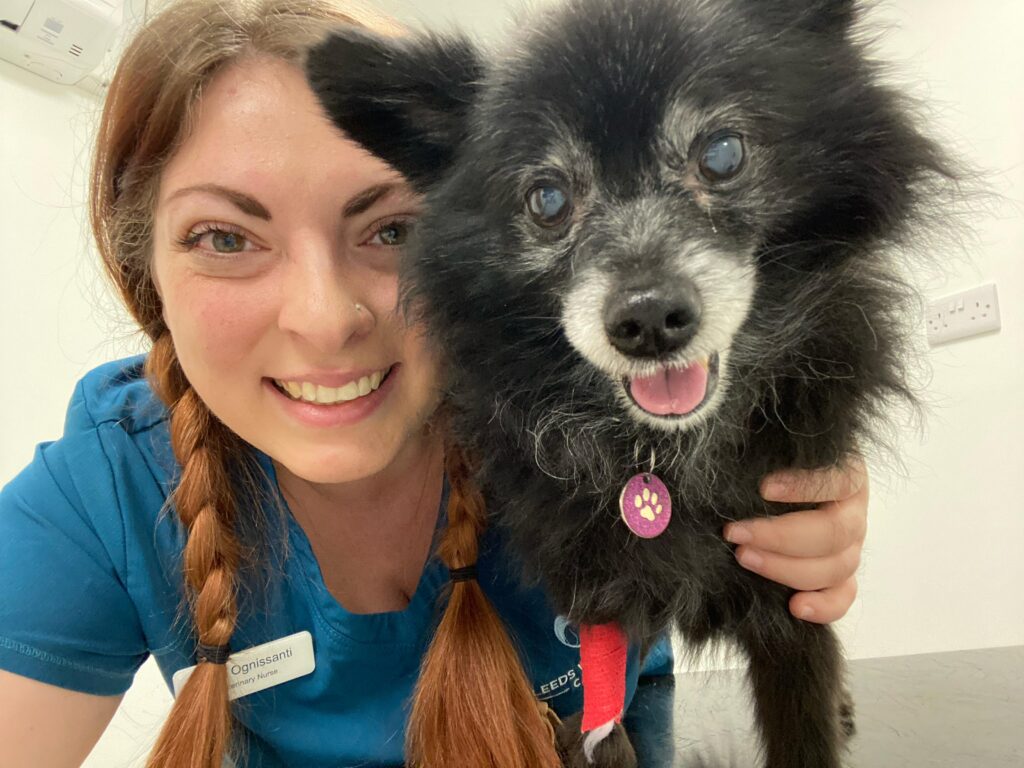
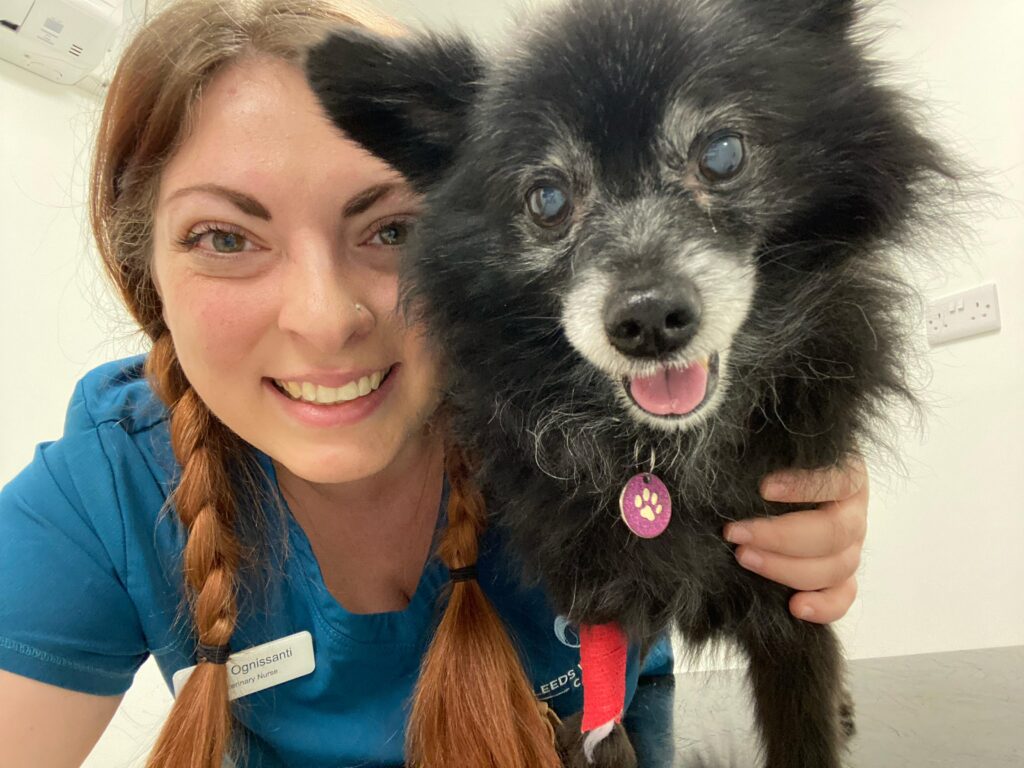
In this blog for Veterinary Nursing Awareness Month, Lidia Ognissanti, an RVN from West Yorkshire, discusses how compassion in practice isn’t just about how we treat animals, it’s about how we treat each other, especially when communication isn’t simple.
Find out more about VNAM here, and how you can get involved this year.
Veterinary practices can be incredibly noisy places to work in. Loud barking in wards, the dreaded drip pump alarms, phones ringing, colleagues talking over one another and often all at once. This is just an annoying background noise for most people. For me, as an RVN with cookie-bite hearing loss, it’s something I have to actively manage every single shift.
Cookie-bite hearing loss essentially means I struggle with mid-range frequency sounds – annoyingly, the range most human speech falls into. So while I can hear environmental sounds perfectly fine, picking out my colleague’s handover while a Cockapoo barks nearby is much harder! This can be confusing for those around me because my hearing impairment is not immediately obvious. I might hear the capnograph screeching at me or a cat meowing in the next consult room but then completely miss large parts of a conversation in a busy prep area. People traditionally view deafness as living in silence, but for me it is living in a very messy soundscape.
At work this shows up in the usual ways you’d expect. Kennel areas and open plan prep rooms can sound like an overwhelming symphony of noise. Masks in theatre remove any opportunity for me to lip read. Phone calls are my final boss because there are no visual cues, maximum background noise and there’s a high chance I’ll agree to something I’ve accidentally misheard. None of this stops me doing my job well but it does mean that I spend a disproportionate amount of time compensating.
The additional mental load of working in a busy clinical setting with hearing loss often goes unnoticed. I need to fully concentrate on every word being said to me, often double and triple checking information to ensure nothing has been missed or lost in translation. This can be incredibly exhausting, particularly when working long shifts.
When we talk about compassion in practice, we often think of how we treat patients or clients but it’s also how we communicate with each other. It doesn’t have to be a grand gesture (in fact, most of us with hearing impairment would find that quite uncomfortable). Something as simple as someone making the effort to face me or not rolling their eyes when I say “sorry, I didn’t catch that” for the fifth time that morning. Those small moments of consideration make all the difference to me because they reduce the mental gymnastics I perform every day, making me feel safer, more confident and much less exhausted.
Hearing loss requires insane amounts of brain power – it’s not just about ears. Constantly straining to pick out speech over all the background noise is tiring and the worry that I may mishear a drug dose or instruction can spike my anxiety on busy days. It can leave me dreading inpatient handovers or feeling frustrated at myself when a vet has to walk across prep to ask me something directly when I didn’t hear them the first time. What helps more than anything is knowing your team has your back.
Choosing when and how to disclose a disability isn’t always simple. There is always the worry that you will be perceived as less capable, particularly in a profession such as ours where competence is so highly valued. This is where having understanding colleagues can make a real difference.
Reasonable adjustments aren’t special treatment, they’re good practice that benefits the whole team and makes for safer (and less stressful) patient care. Technology such as digital stethoscopes, hearing aid amplifiers and phone loops can vastly improve my day-to-day functioning but sometimes the simple tweaks can be just as powerful. If I could give my colleagues a helpful checklist, it would be this:
- Face people when you speak to them, especially when giving critical information
- Encourage the use of closed loop communication – let’s normalise asking for clarification
- Choose quieter areas to exchange important information, such as patient handovers
- Use written as well as verbal instructions when you can – following up an instruction with a note on the whiteboard goes a long way!
Most importantly, I’ve learned to advocate for myself confidently and unapologetically. Asking for safer, clearer communication benefits us all and takes away the pressure on those of us with hearing impairments to simply “listen harder”.
Veterinary Nurse Awareness Month is a time for us to celebrate the diverse range of experiences within the profession. This includes talking openly about disability in practice and how this isn’t a barrier to competence, but something that requires adaptation and understanding. In a time when we are struggling to retain nurses in the profession, it’s now more important than ever to push for flexibility and inclusivity. Nurses with disabilities bring valuable perspectives and problem-solving skills shaped by our lived experiences.
My hearing impairment has made me a more empathetic nurse – I’m more patient with clients who don’t understand something the first time around and I’m extremely mindful of how overwhelming the environment can be for stressed patients. Navigating roadblocks every day gives you a different perspective which is invaluable in a job such as veterinary nursing.
Working with a hearing impairment does not make me a less competent RVN, it just means I work slightly differently. My hope is that sharing experiences like this helps to normalise our differences and encourages open conversations about accessibility in veterinary practices. I can still monitor anaesthetics, advocate for my patients and support my team to the same standard as any other nurse. I just need you to face me when you ask a question. And honestly? That sounds like a pretty fair trade to me!
Lidia Ognissanti, RVN