
BVNA is 60
17 December 2025
BVNA is 60: Early beginnings from the first BVNA chairperson, Jennifer Townson
As we reach the end of BVNA’s 60th anniversary year, we now take a look back to the very beginning.
This piece was written by the very first BVNA chairperson, Jennifer Townson, upon the ‘veterinary nurse’ title finally becoming recognised in 1985. Here, Jennifer takes us through how BVNA came to be in its earliest days, where the veterinary nursing profession was then known as ‘Registered Animal Nursing Auxiliaries’ – and BVNA as the ‘British Animal Nursing Auxiliaries Association’ (BANAA).
The recognition of veterinary nursing as a profession followed 20 years of campaigning by representatives and supporters of BANAA.
Jennifer’s article reads as follows:
It may not be generally known that it took many years of discussion for the veterinary profession to agree that a veterinary nursing scheme was needed and possible. The entire idea was thrown at the rest of the veterinary profession with little or no guidance on how it might work.
A syllabus was drawn up with no further suggestion or thought on how or at what level teaching should proceed. At the BSAVA Congress in 1962, an unofficial Veterinary Nursing Committee was formed to attempt to put the whole concept onto a practical and more scientific footing. This Committee was under the Chairmanship of Mr. R.S. Townson, MRCVS and Dr J.G. Startup was the Secretary. I was asked to sit on this Committee. There were only a few months left before the date of the first examination in which to plan a standard in order to satisfy the first examiners. This involved a phenomenal amount of work by the BSAVA.
Later, this same Committee was elected, under the Chairmanship of Mr C.E. Woodrow MRCVS as a sub-committee of the BSAVA. Various other Chairmen succeeded “Woody” as he was always kindly known, and this Committee together with the rest of the BSAVA supported the veterinary nurses to the utmost. At about this time, an RCVS/ANA Committee was formed.
There was always a hard core of members of the veterinary profession who felt that the formation of a nursing ‘profession’ was unwise, and would probably become a ‘threat’ to the jobs of newly qualified veterinary surgeons, and as a consequence were definitely going to make ‘waves’ within the veterinary profession!
Those of us who qualified to become the early ‘RANAs’ soon realised that some kind of liaison between us and the veterinary profession was necessary, and that future nurses and trainees should have some means of contacting each other, with news of working conditions, etc. The concept of a ‘Newsletter’ was formed. This was rather a primitive affair with little or no support despite pleas for news and views from other RANAs. It was quite a lot of hard work, with expenses mounting for stationery and posts. Funds were nil and if it had not been for the help of husbands and employers, I think this Newsheet would have folded! However, an old ‘Roneo’ machine was found which helped the Newsheet to continue.
The late Mr. John Hodgman MRCVS, a very staunch supporter from the beginning, suggested that we should form ourselves into an Association, with an elected Council and a constitution. None of us had any idea of committee procedure or how to set about forming an Association. However, with the help from our peers and most of all from Mr. Alastair Porter, Registrar of the RCVS, we eventually had an Association with a title, a duly elected Council, and a constitution. The title of the Association was initially the British Veterinary Nursing Association but soon afterwards become BANAA [the British Animal Nursing Auxiliaries Association], because of the protected title ‘nurse’.
I was honoured to be appointed the first Chairman. Our Council worked hard with little help. Our first Treasurer, Rosemary Popplewell, worked miracles with the help of her practice accountants. Council meetings were held in practice waiting room, employers’ sitting rooms, RANAs flats etc. and we could offer no travel expenses. Our AGMs became lively affairs, and were held wherever we could hire a room cheaply and provide wine and sandwiches at a reasonable price. Our guest speakers agreed to come for nothing more than the refreshments and eventually we began to show a small profit.
“Any other business” invariably reverted to the hated word ‘Auxiliary’ and as the representatives of the BANAA we would make attempts to have the word eliminated. We went through the correct channels, but were met with obstruction at every turn. The word ‘nurse’ was protected under statute law, the word ‘veterinary’ equally protected under a charter, and could under no circumstances be used by use. The BSAVA as a whole always supported us but auxiliaries we remained.
Can you imagine the pride and pleasure now, more than twenty years later, that we are VETERINARY NURSES. This has been finally achieved mainly by the hard work of truly dedicated and diplomatic veterinary nursing councillors, together with the support of the BSAVA and the unstinting help of Mr. Porter. The respect which has been earned by the veterinary nursing profession is due to many people who have given their time and efforts on our behalf.
(Mrs. Townson qualified as RANA number six and received the first BSAVA Nursing Award – a medal suitably inscribed.)
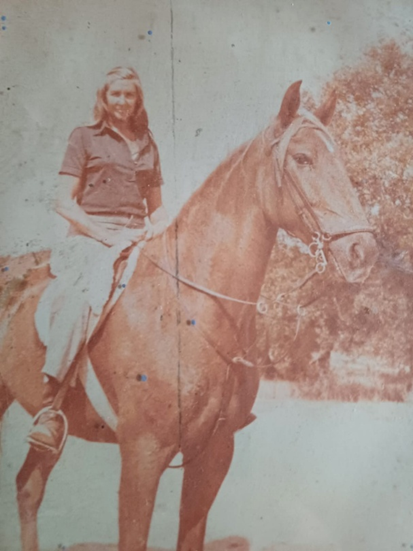
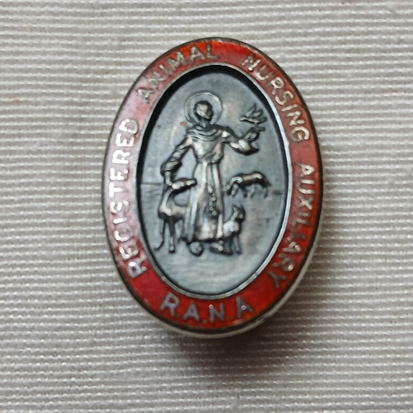
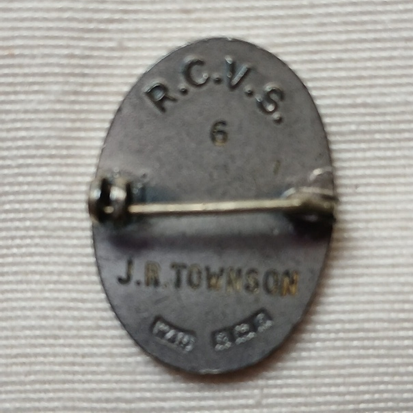
In 2025, to commemorate BVNA’s 60th anniversary year, BVNA re-introduced the Jennifer Townson SVN of the Year Award. This award recognised a student veterinary nurse who is currently undertaking training and has contributed to raising awareness of the veterinary nurse role, or has been supportive to other students throughout their studies.
As a special part of the awards ceremony, this award was presented by Jennifer Townson’s granddaughter, Emma Townson – who has continued her grandmother’s legacy by becoming a veterinary nurse herself. The Jennifer Townson Award 2025 was won by Sophie Barnes (pictured below with Emma Townson).